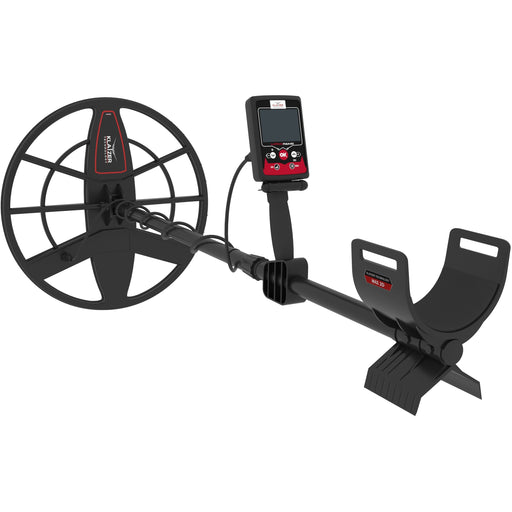
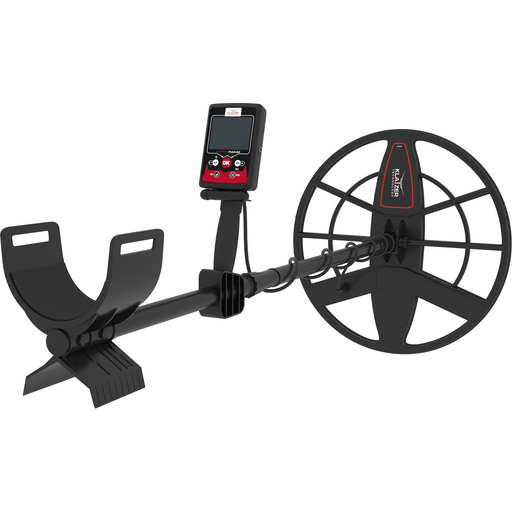
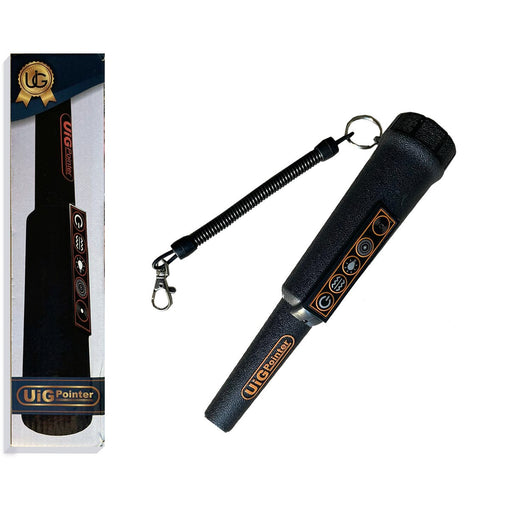
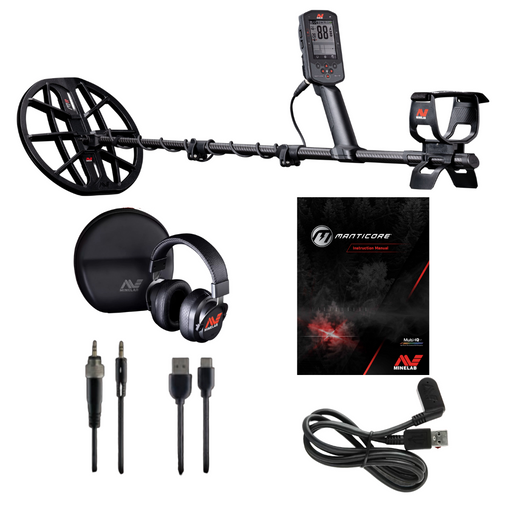
OKM Gepard GPR 3D Metal Detector
Depth: 40 meter (132 ft)
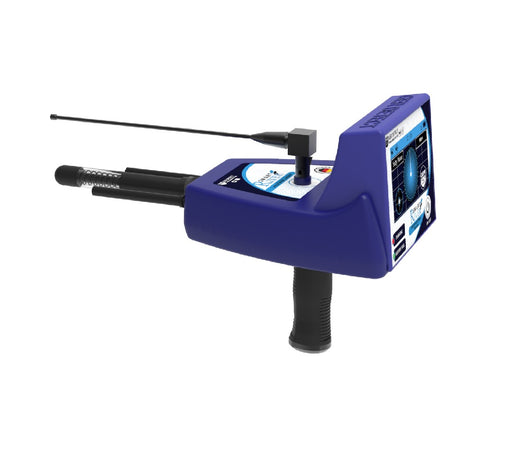
The Gepard GPR is a very flexible and powerful Ground Penetrating Radar for the detection of underground objects like pipelines, cavities, cables, conduits, tunnels, bunkers and foundations.
The Gepard ground penetrating radar uses an omnidirectional unshielded transmission system to reach maximum depths up to 40 meters (131 ft). The agile and compact unit can easily be operated by a single user via Android Tablet PC.
The RADAR (Radio Detection and Ranging) of the Gepard GPR 3D sends a signal into the ground and awaits the reflection or echo of the signal to detect sub-surface anomalies.
Detectable Objects and Structures
- Underground walls, basements and concrete reinforcements.
- Hidden cavities, graves and sepulchers.
- Water level and underground rivers and aquifers.
- Buried pipelines, conduits and cable harnesses.
- Backfilled wells, galleries, trenches and dugouts.
- Septic tanks, distribution boxes and drainage pipes.
- Secret tunnels, bunkers and shelters.
- Buried treasure chests, statues and caches.
Optimization of Ground Surveys
The Gepard ground penetrating radar is using a multiple transmission frequency range starting at 60 MHz up to 300 MHz which is realized by adjustable telescopic antennas. It furthermore supports many automatic adjustments to optimize your ground surveys on specific soil types, which makes the handling of the Gepard ground radar very easy. You just set your depth resolution and start surveying.
Measurement Data Analysis with Android App
The measured data of the ground penetrating radar is immediately transferred to the Android Tablet PC. The Android software receives the data via WiFi and displays it directly on screen.
The software offers the option of integrating a GPS signal or Google Maps, filtering automatically and entering notes for later recollection of specific scan details. Additionally, the automatic filtering option improves the results of your scan and assists in finding hidden objects and structures more easily. Due to the integrated GPS all scan positions can be stored along with the scan data.
GPR Scan Analysis in Visualizer 3D Studio
The new render views in OKM's 3D software Visualizer 3D Studio allow visualizing detected structures for more detailed analyses.
As soon as you open a GPR measurement, the Main Toolbar will include a further button. Here you can switch between the 2D and 3D render view.
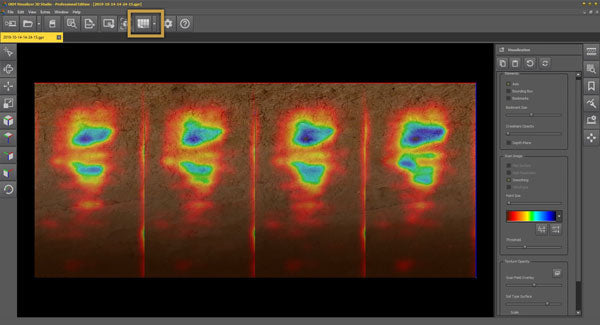
Radargram 2D of a Gepard GPR scan in Visualizer 3D Studio
Improve the scan image e.g. by selecting one of the newly added OKM GPR Soil Types (Right Sidebar) and configuring the Visualization (Right Sidebar), e.g. select Smoothing.
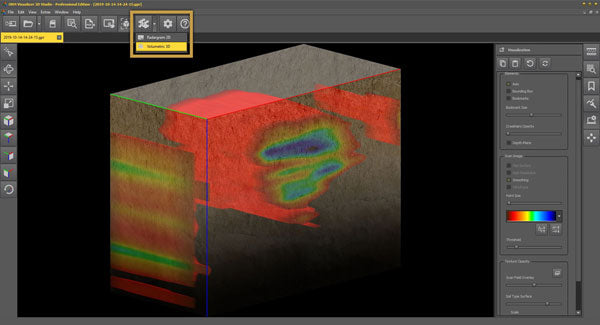
Volumetric 3D view of a Gepard GPR scan in Visualizer 3D Studio
In the Visualization menu (Right Sidebar), you can change the Threshold to regulate the number of hidden/visible scan values and corresponding colors for the Volumetric render view.
This will help you focus on the most significant targets in your scan image.
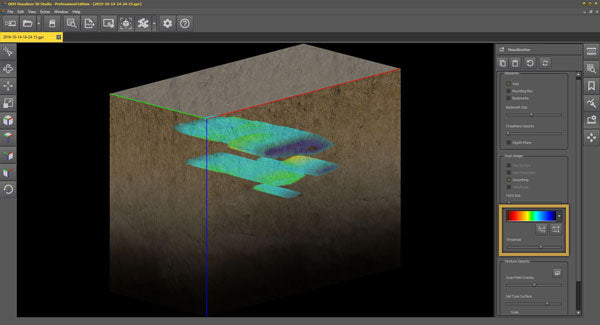
Volumetric 3D view of a Gepard GPR scan with optimized Threshold
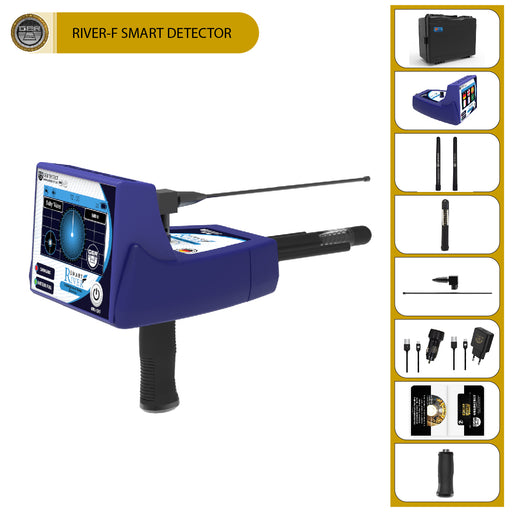
Accessories Included from Factory:
- Control Unit.
- Android Tablet.
- Telescopic Shaft (2).
- Sending Antenna for Gepard GPR 3D.
- Receiving Antenna for Gepard GPR 3D.
- USB Flash Drive with OKM Visualizer 3D Studio Professional Edition.
- Bluetooth Headphones incl. charging cable.
- Charger with charging cable.
- Travel Adapter.
- Waterproof and shock-resistant Protector Case.
- Quick Start Guide.
- OPTIONAL Pre-configured Windows Notebook.
*2 years warranty
INTERNATIONAL CUSTOMERS
Import Duties, Taxes, and charges are not included in the item price or shipping charges. These charges are the buyer responsibility.
Frequently Asked Questions (FAQ)
What is the detection depth of your metal detectors?
Our metal detectors vary in detection depth depending on the model and the type of metal being detected. Generally, our detectors can identify targets at depths ranging from a few inches to several feet. For specific models, please refer to the product specifications on our website.
Can I test my metal detector with freshly buried metals?
Freshly buried metals cannot be detected immediately. For a metal detector to sense the buried metal, it needs to disrupt the magnetic field, which requires the metal to remain underground for a certain amount of time.
What is the detection distance of your professional metal detectors?
Professional metal detectors locate metals buried for many years by detecting subtle environmental changes caused by these metals. They utilize bio-energy interaction, ionization technology, electromagnetic field detection, advanced microprocessor analysis, long-term soil disturbance detection, and sensor fusion. The longer the burial time, the easier it is to detect these metals due to more pronounced ion fields and electromagnetic signatures.
What factors affect detection capability?
Several factors can influence detection capability, including:
● Soil Conditions: Mineralization levels and moisture can impact performance.
● Target Size: Larger targets are typically detected at greater depths than smaller ones.
● Detector Settings: Adjusting sensitivity and discrimination can help optimize detection.
What are some practical testing methods for professional metal detectors?
● Field Testing in Historic Sites: Test in areas with known buried metal objects, like historical battlefields or archaeological sites (with permission).
● Using Known Buried Objects: Test in places where long-buried metals are documented, such as old farm fields or construction sites.
● Avoid Air Testing: Do not test with unburied or freshly buried metals. These detectors work by detecting ionization fields around long-buried metals, unlike hobby detectors.
● Avoid Testing Inside Structures: Testing indoors can lead to interference from numerous cables, electrical systems, and other factors that can affect the performance of professional detectors.
How do I maintain my metal detector?
To keep your metal detector in top shape:
● Clean After Use: Remove dirt and moisture from the detector, especially the coil.
● Store Properly: Keep it in a cool, dry place and avoid extreme temperatures.
● Check Batteries: Regularly check and replace batteries to ensure optimal performance.
Can I use my metal detector into the water?
Some of our metal detectors are designed for water use, while others are not. Always check the product specifications to see if your model is waterproof or submersible before using it in water.
What should I do if my metal detector isn't working properly?
If your metal detector isn't working, please follow these steps:
● Send Us a Video: First, send us a video demonstrating how you are using the detector. In 95% of cases, the issue is due to user error.
● Technical Review: Our technical team and the manufacturer will review the video to determine the cause of the issue.
● Next Steps: Based on their assessment, we will provide a solution, which may include fixing the device, replacing it, or confirming that it’s a user error.